Julia Reveals Her History with William
Falling For The CEO: BAD BOY ROMANCEJulia Reveals Her History with William is the disclosure that ruptures Diana Jones's confidence in William King and changes the central question of their romance from whether workplace boundaries can be overcome to whether love can survive concealed histories. Julia's revelation that she was William's wife, together with her claim that she had a son, makes Diana reinterpret William's silences as a possible second deception and forces both lovers to distinguish between guilt, betrayal, trauma, and the difficult work of rebuilding trust.
Causes and Background
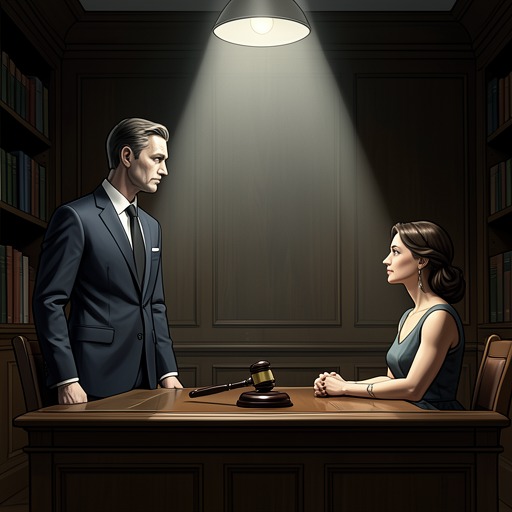
Julia's disclosure occurs after Diana meets her in connection with a job interview. Julia first asks about William's condition, phrasing the question as personal concern rather than professional curiosity. Her familiarity unsettles Diana, who carefully describes William only as the hotel manager and conceals the romantic connection between them. When Diana asks why Julia is interested, Julia explains that she had worked at the Grace Hotel while travelling with her husband, then identifies that husband as William King.
The revelation lands with particular force because Diana and William already have a history of withheld information. When they first met, Diana did not immediately understand that the man in the elevator and office was the manager who employed her and Connor Jones. She later told William that she could not pursue him because he was her brother's boss, while concealing the further fact that she herself worked for him. William discovered the truth by recognizing Diana in an employee photograph and concluded that she had lied about the reason for rejecting him. Their earlier conflict had therefore established honesty and trust as the terms on which the relationship would either survive or fail.
What Happens
Julia's statement that William was her husband leaves Diana physically disoriented. She leaves the interview building in a daze, leans against the hotel's exterior wall, and calls Connor Jones because she cannot yet explain what has happened. She had expected to contact William after the interview and go to lunch with him; instead, she abandons that plan and tries to steady herself before returning home.
At home, Diana separates two injuries. She can imagine accepting that William was once married, even though it hurts that he shared marriage with someone else. What she cannot accept is that he had discussed marriage and a future with her without revealing this part of his life. The omission becomes more threatening when Diana remembers that Julia has a young son. By calculating the timing of Julia's employment at the hotel and the child's age, Diana concludes that William might be the father. The possibility changes the meaning of his silence: it would not merely conceal a former relationship but suppress an identity as a parent.
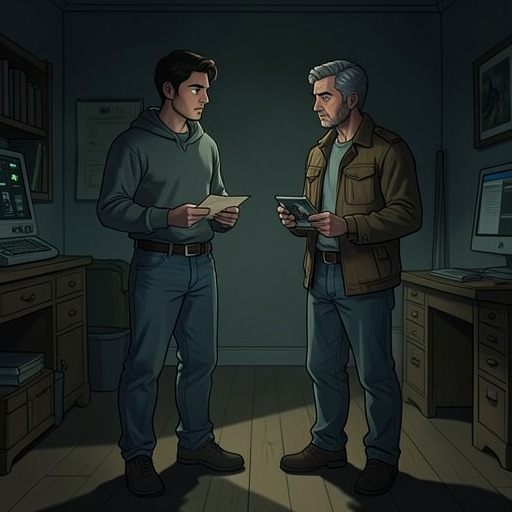
When William arrives, Diana confronts him about the former wife and child. He is shocked and denies being a father. Diana explains that Julia told her she had a child, then presses him to say whether he had ever intended to tell her about his past. The confrontation mirrors the earlier dispute over Diana's employment: William had accused her of lying, and now she sees him as having withheld information that she considers equally capable of destroying trust.
William then supplies the missing history. He says that he remained with Julia until a medical appointment made for the twelve-week point in her pregnancy. At the appointment, he learned that the child's timeline could not fit his absence from a conference during the possible period of conception. He did not challenge Julia in front of the doctor, but left afterward, packed his bags, contacted a lawyer, and did not see her again after the divorce. Julia first begged him to stay and said that she loved him; when he refused, she blamed him for neglecting her. William describes this reversal as the moment when he saw a selfishness he had not recognized before their marriage.
Consequences and Aftermath
William's explanation softens Diana's anger without erasing the damage. She recognizes the betrayal he suffered and understands why the marriage is difficult for him to discuss, but she refuses to treat that pain as a complete excuse for deceiving her. His account also reveals that his silence is not evidence that he regards the child as unimportant; the child was not his, and the marriage ended when he learned that Julia had betrayed him.
The conversation nevertheless exposes a deeper problem. William admits that he has not spoken to anyone about what happened and does not know whether he has worked through his feelings. Diana identifies this unresolved trauma as a danger within their relationship. She tells him that she is not Julia, but that, until he confronts what Julia did to him, he may respond to Diana as though she were the same person. Her decision is not a rejection of love: she explicitly acknowledges how much she loves him and how much she does not want to lose him, while insisting that love cannot make an untreated wound harmless.
Diana therefore separates from William until he heals. She kisses him on the forehead and opens the door, turning the disclosure into a conditional separation rather than an immediate final ending. The event leaves the couple with a demanding form of reconciliation: William must not merely explain the past, and Diana must not merely apologize for her own earlier concealment; both must accept that a renewed relationship requires full knowledge, responsibility, and emotional work.
Narrative Significance
The event is built around shifting identities. Diana has encountered William as a stranger, Connor's employer, her own employer, and her lover; Julia's statement adds the legal and intimate identity of husband, while the alleged child briefly introduces the possibility of fatherhood. Each identity redistributes power. Diana's earlier concealment protected her from professional and emotional vulnerability, whereas William's concealed marriage leaves her unable to judge whether the man she loves has presented himself truthfully.
The disclosure also creates an ethical symmetry between the lovers without making their deceptions identical. Diana hid that her work as a tour guide was performed at the hotel because she feared William would think she had deliberately misled him. William hid his marriage because his relationship with Julia ended in betrayal and because he had not processed the experience. Both omissions arise from fear, but the event insists that understandable motives do not remove the need for accountability. William's request to start over without the lie between them can succeed only if the past is faced rather than bypassed.
In this way, Julia's revelation is not simply a plot twist about an ex-wife. It changes the emotional grammar of the romance. The welcoming event at the Grace Hotel had introduced William publicly as the manager whose authority and polished wealth organized the room; Julia's disclosure strips that public identity of completeness. The subsequent confrontation asks whether he can become trustworthy not through control or charm, but through admission, vulnerability, and sustained healing. Diana's boundary gives that question its clearest answer: forgiveness may remain possible, but reconciliation must wait until the concealed past no longer governs the present.